SEO

7 Minutes Read

Published on 25 Jun 2026 | Updated on 25 Jun 2026

The Complete Guide to Local SEO for Built Environment Service Companies

Copy Link
Facebook
Twitter
LinkedIn
The Complete Guide to Local SEO for Built Environment Service Companies

Table of Contents


Local SEO is how a company becomes visible for searches tied to a place: the map results, the "near me" queries, and the location-and-service terms buyers actually use. It matters more than it first looks. Two companies can offer the same service and rank very differently, simply because of where the customer is searching from. Search engines read location into almost every query, even when no one types it.

For built environment companies, the stakes are higher. Their work is rooted in specific projects and places, so that location signal is one of the strongest forces shaping who gets found. It is also the part of search many companies pay the least attention to. This local SEO guide covers what local SEO for built environment companies involves, why it matters, and the practical steps to get it right.


What Local SEO Means for a Built Environment Company
What Local SEO Means for a Built Environment Company

Local SEO, or local search engine optimization (sometimes called local SEO), is best understood as search with a sense of place. It works across three connected areas:

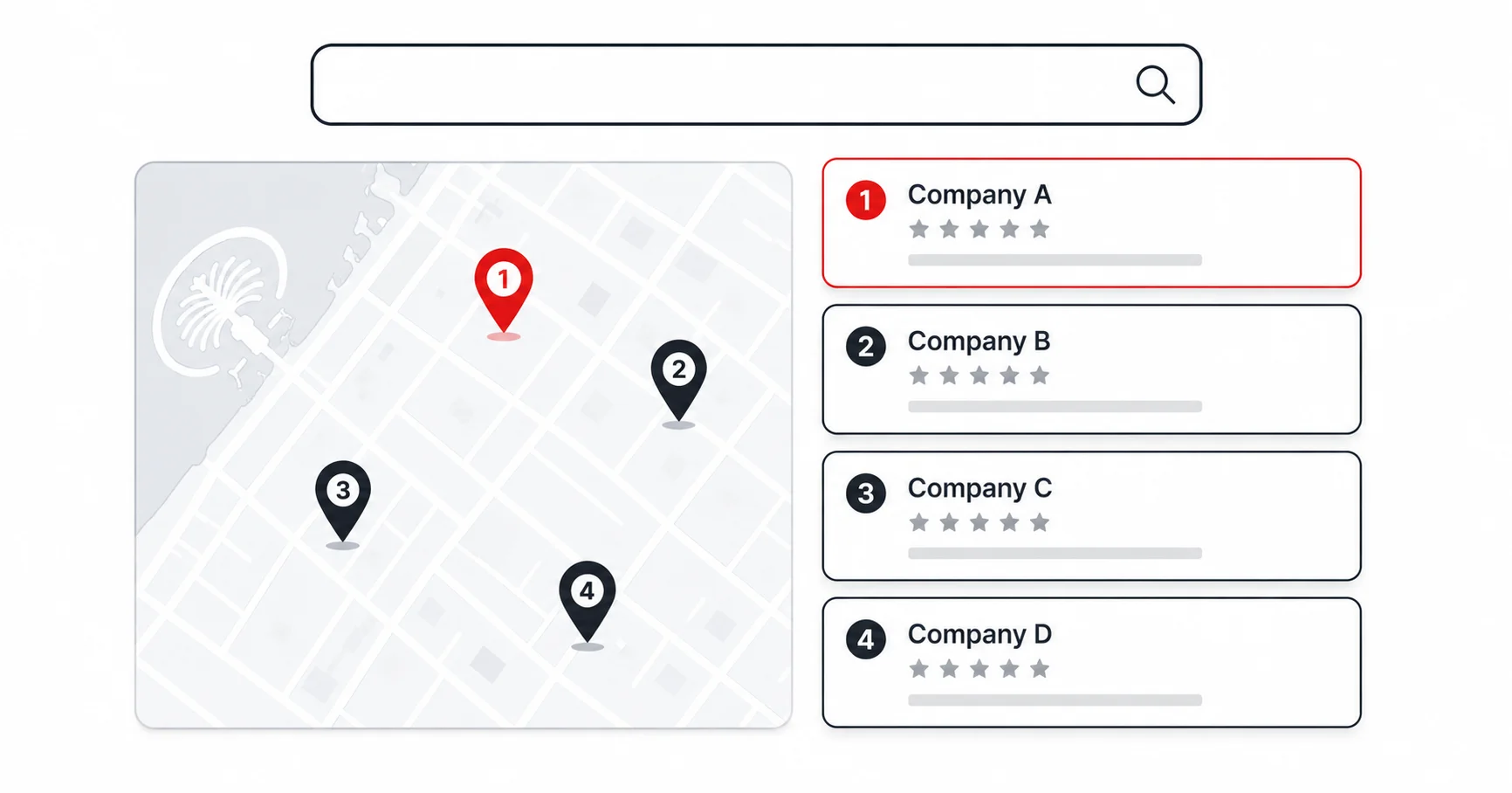
•        The map pack, the cluster of business listings shown with a small map.

•        The Google Business Profile that feeds those listings.

•        The ordinary organic results for any search that carries a location.

For built environment companies, location is rarely incidental. A buyer almost never looks for a service in the abstract; they tie it to a place, because where the work happens shapes feasibility, access, timelines, and cost. The location in a search is, in effect, a buying signal.

Key insight: General SEO helps a company rank for a service. Local SEO helps it appear at the moment a buyer ties that service to a place, which in this sector is most of the time.
 

Why Local SEO Matters in the UAE Built Environment

Local search rewards relevance to a place, and that is exactly what built environment buyers are screening for. A project lives at an address, so the question behind most searches is not only who does this work, but who does it here. A company that reads as local and active in the area has answered part of that question before anyone clicks. In practice, local SEO for contractors and SEO for local builders comes down to being the name that shows up when someone searches for that work in that area.

Two things give that visibility extra weight. The map pack sits near the top of the page, often above the standard results, so whoever appears there is seen first. The Google Business Profile behind it then doubles as a quick credibility check. And the demand is not a niche: HubSpot, citing Google data, reports that around 46 percent of all Google searches carry local intent.

Underneath all of it sits trust. When someone looks a company up by name, or by service and area, the Business Profile is usually the first thing they see. A complete, accurate one quietly reassures; a thin or empty one leaves a question unanswered before any conversation starts.


The Foundation: Your Google Business Profile

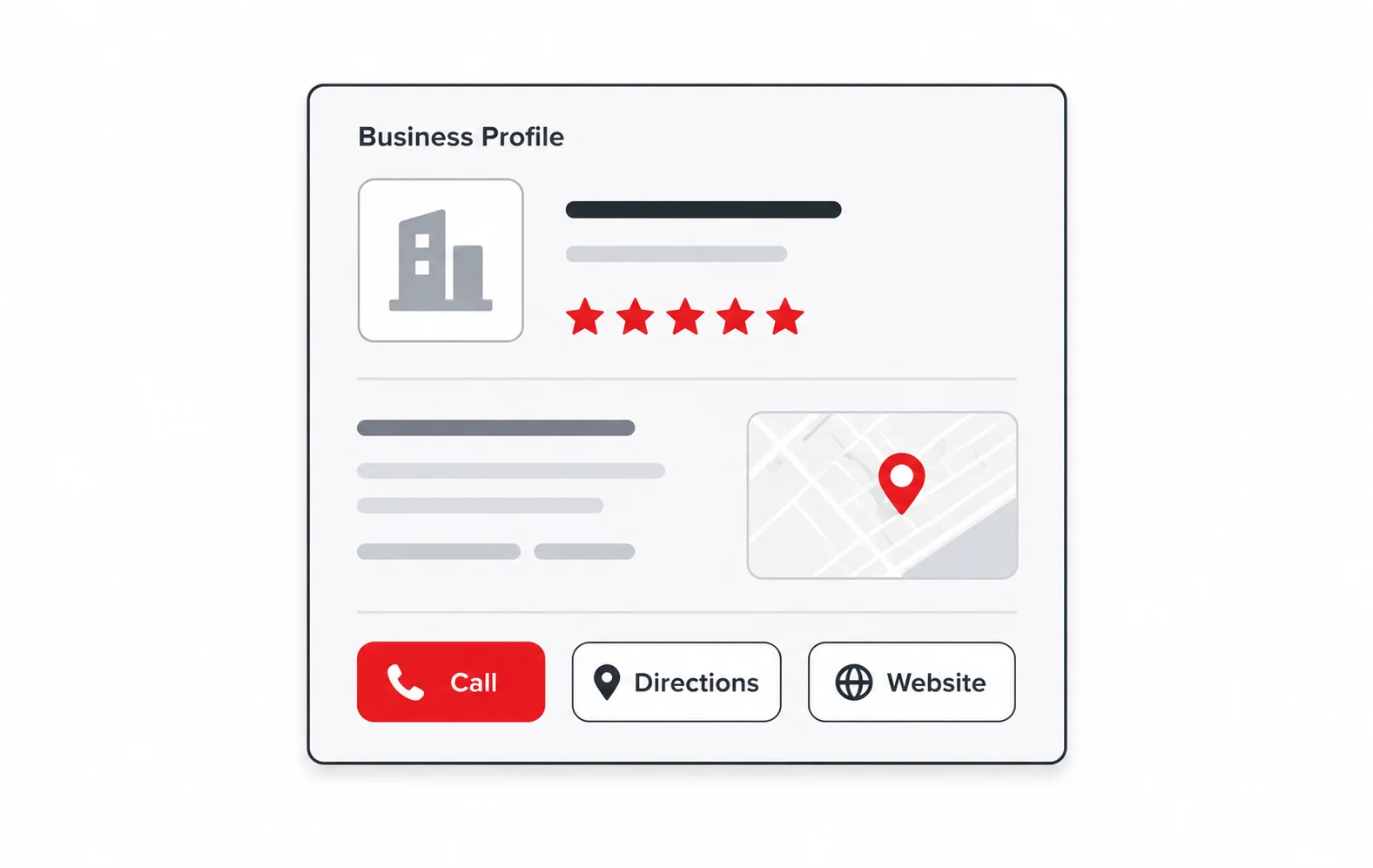
A Google Business Profile is the single most important local SEO asset, and for many built environment companies it is the most neglected. It is what feeds the map pack and what appears beside your company name in search.

Getting it right means covering the basics properly:

•        Claim and verify the profile, and set the correct primary category (for example "General contractor," "Interior fit-out," or "Steel fabricator").

•        Complete every field: services, service areas, hours, a real description, and consistent contact details.

•        Add genuine project photos with clear, descriptive file names, not stock imagery.

•        List service areas that match the emirates and districts you actually work in.

•        Keep it current. Update it when services, locations, or contact details change.

Google's own guidance is plain on this: complete and accurate Business Profiles are easier for it to show in relevant local results. The profile is not a directory entry to set and forget. It is a live asset that earns visibility when it is maintained.


Showing Local Relevance on Your Website

The map pack is only part of local search. Standard organic results still carry plenty of place-based queries, and a website earns those by showing genuine relevance to the areas it serves.

That relevance comes from substance rather than labels. A page meant to rank for work in a particular area should reflect real activity there: the kind of projects, the local context, and clear proof that the company operates in that market. Aligning these pages with the service areas listed on the Google Business Profile strengthens the signal, so the website and the profile tell search engines the same story. In one account we manage, a commercial lighting company reached the top local result for its core service once its website and Business Profile pointed at the same local intent.

The reverse is worth keeping in mind. A page built for an area where a company has no real presence tends to read as thin, and adds little. Local relevance is most convincing when it is genuine.


Reviews, Citations, and Consistent Business Details

Reviews, Citations, and Consistent Business Details


Three quieter signals sit underneath local rankings, and they carry weight even in a sector where the buyer is a procurement team rather than a walk-in customer.

The first is reviews. BrightLocal's Local Consumer Review Survey has consistently found that the large majority of people read online reviews before choosing a local business. A decision-maker checking a company's profile applies the same instinct, so a steady stream of genuine client reviews supports both ranking and trust.

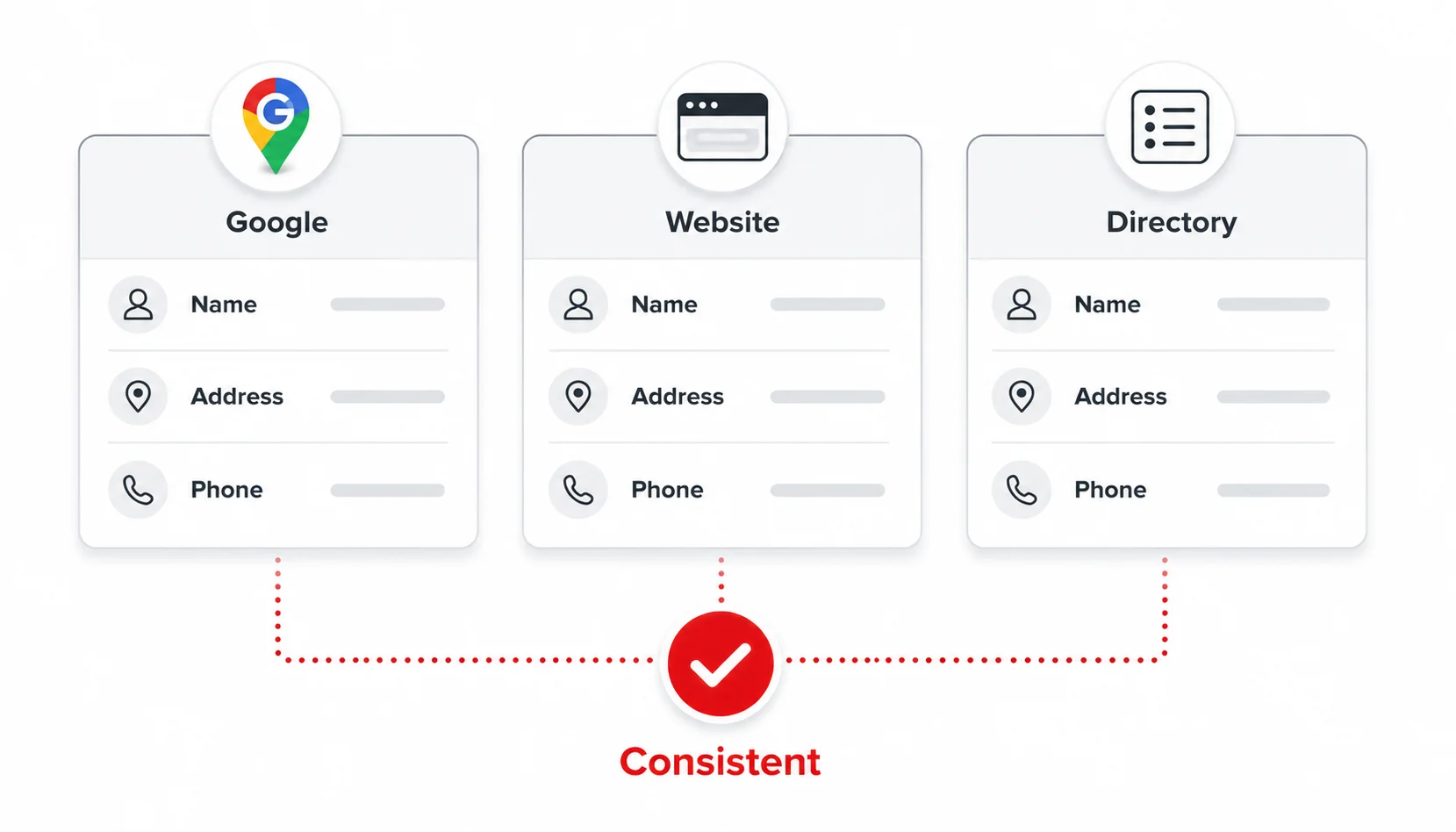
The second is citations: mentions of your business name, address, and phone number across directories and industry platforms. The third is consistency. Your name, address, and phone number should match exactly everywhere they appear, from your website to your Business Profile to any directory listing. Inconsistent details confuse search engines and weaken local ranking.


How to Measure Local SEO

Local SEO leaves a clear trail, which makes it easy to tell whether the work is paying off. Track a few signals that matter, rather than vanity numbers:

•        Local rankings for your core service-and-location terms, checked from the relevant area.

•        Map pack presence: whether you appear, and where, for those searches.

•        Google Business Profile actions: calls, direction requests, website clicks, and profile views, all visible in the profile's own insights.

•        Local organic traffic and enquiries: visits and contact actions from your service and location pages.

These tell you whether visibility is turning into the early-stage contact that built environment work depends on.


A Practical Local SEO Checklist

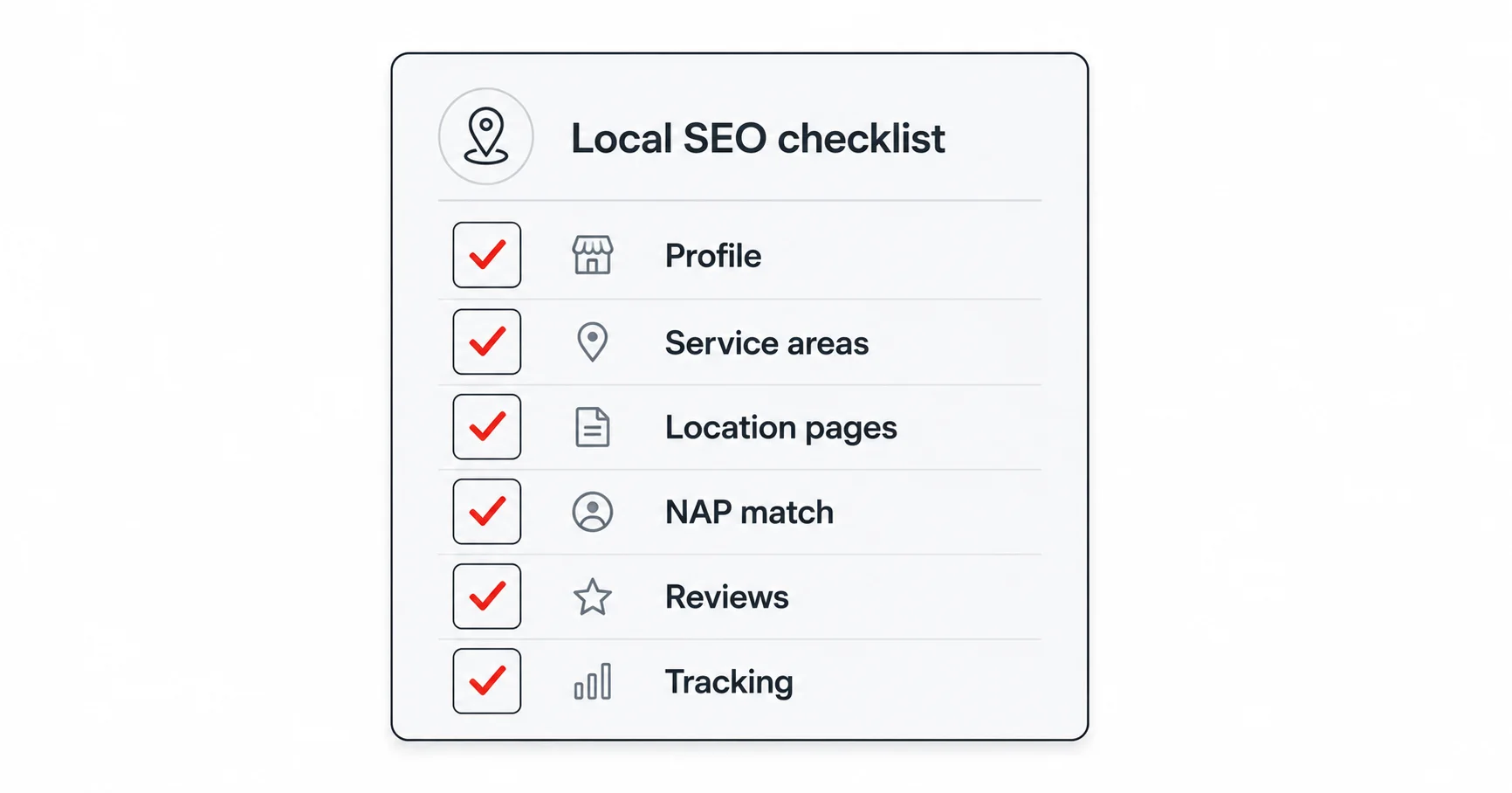
These local SEO tips double as a quick self-check. Any marketing manager or business development lead can work through the list:

1.     Is your Google Business Profile claimed, verified, and complete, with the right category and real project photos?

2.     Do your service areas on the profile match the districts and emirates you actually serve?

3.     Does each area you serve have a page that genuinely reflects real work there, rather than a thin or generic mention?

4.     Are your business name, address, and phone number identical across your website, profile, and any directory?

5.     Do you have a simple, ongoing way to gather genuine client reviews?

6.     Are you tracking map pack presence and Business Profile actions, not just overall traffic?

Any "no" is a part of local search where there is visibility still to gain.


Frequently Asked Questions

1. What is local SEO for built environment companies, and how is it different from regular SEO?

image

2. Is a Google Business Profile worth it for a B2B contractor?

image

3. How many location pages should we build?

image

4. How long does local SEO take to show results in the UAE?

image

5. How can a contractor improve local SEO rankings?

image

6. Do online reviews really affect a B2B built environment company?

image

Local SEO for UAE Built Environment Brands: Get Found and Trusted in Your Own City First.

Working on local search visibility for your built environment company in the UAE? GS Digital helps construction, fit-out, and building material brands set up Google Business Profiles, build service and location pages, and rank for the local searches buyers use. If you are not showing up in your own city for your core services, we can show you why.

Clutch verified agencyGoogle PartnerMicrosoft Advertising Partner
Local SEO for Built Environment Companies: A Complete Guide | GS Digital