



Published on April 23, 2026 | Updated on April 23, 2026
What Does the “Built Environment” Really Mean in the UAE?


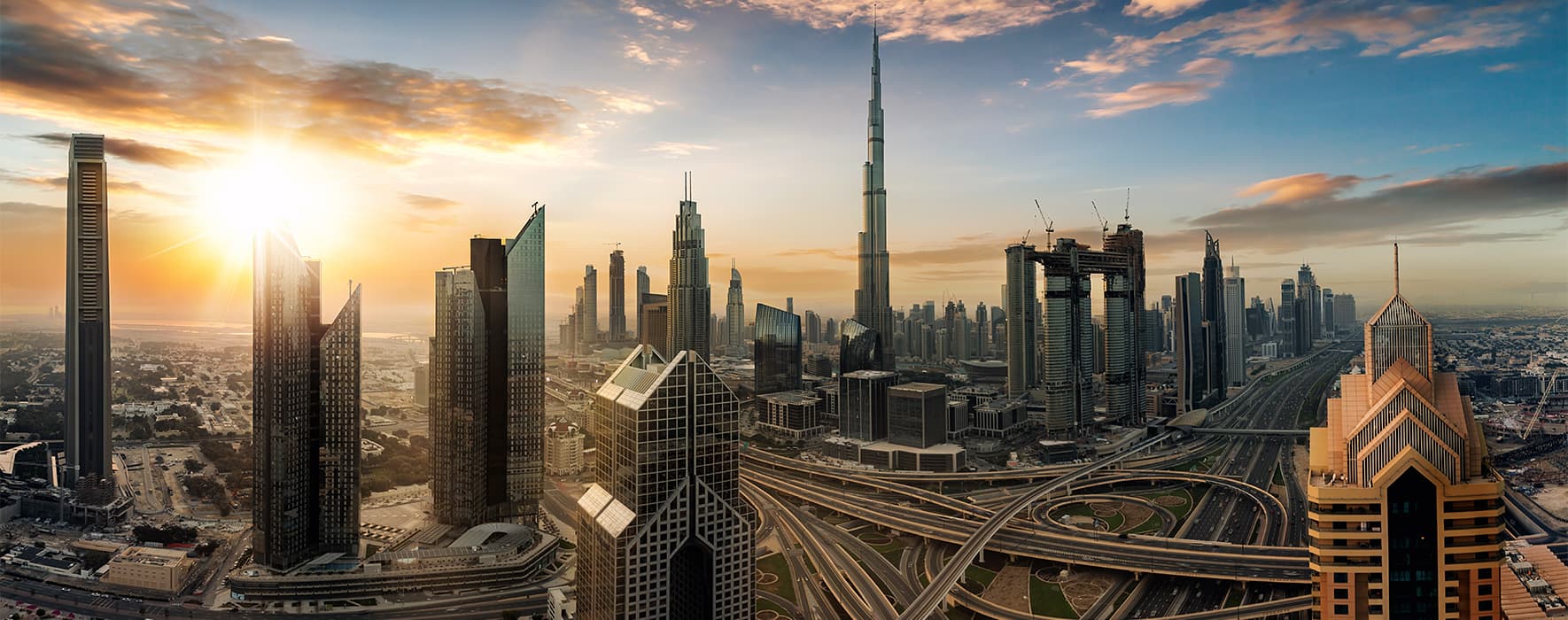
Table Of Content
1. Understanding the built environment: more than just buildings
2. What makes the UAE's built environment unique?
3. Why understanding the built environment matters for your business
4. Key built environment sectors shaping UAE development
5. Current trends transforming the UAE's built environment
6. Navigating UAE's built environment regulations
7. How digital technology is reshaping the UAE's built environment
8. Why contractor digital marketing matters for built environment companies in dubai and the UAE
9. What is next for the UAE's built environment?
10. Understanding the built environment: your competitive advantage
11. Frequently asked questions
Stand on the observation deck of the Burj Khalifa on a clear morning and look out...
And understanding what that term actually means, and why it matters, can change how you position your construction or development business.
Understanding the built environment: more than just buildings
The built environment is the collection of all human-made structures, infrastructure, and spaces that support how we live, work, and interact.
Think of it this way. A hospital is a building. The roads connecting it, the utilities powering it, the parking areas, pedestrian access, and zoning decisions that placed it within a community all form part of the built environment.
The built environment includes:
- Buildings: residential, commercial, industrial, hospitality
- Infrastructure: roads, bridges, utilities, power, drainage
- Public spaces: parks, walkways, plazas
- Systems: transport networks, communications, urban planning
It exists in contrast to the natural environment such as deserts, coastlines, and waterways. In the UAE, this distinction is particularly significant given how extensively the natural landscape has been transformed.
Architects design the buildings. Engineers ensure they stand. Contractors build them. Developers finance them. Facility managers maintain them. Government authorities regulate them. Each role is distinct, but all contribute to a single interconnected system.
Key distinction: "Construction industry" refers to the activity of building. "Built environment" refers to the result - the entire physical fabric of human settlements.
What makes the UAE's built environment unique?
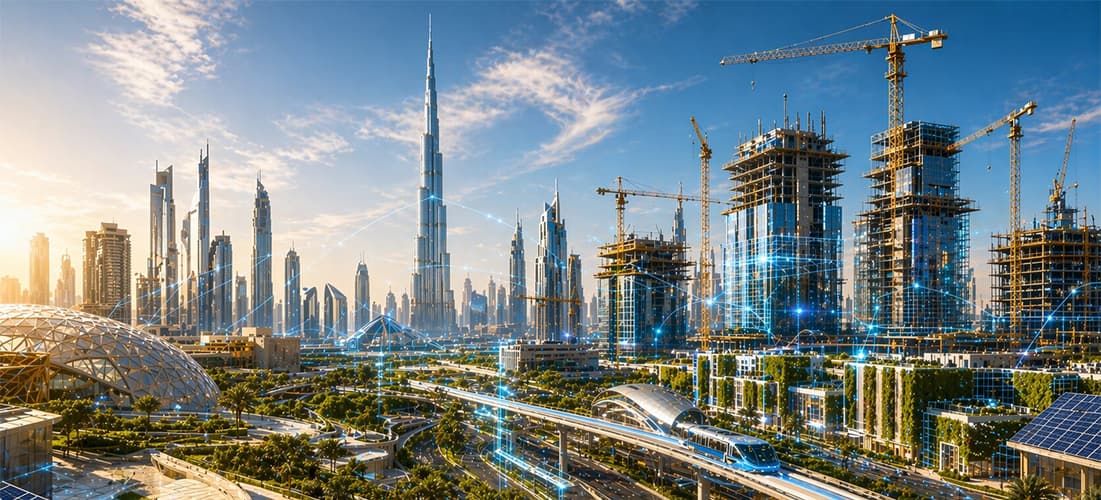
Every country has a built environment, but the UAE’s stands out due to its pace of development, scale, and level of integration.
Rapid transformation
In just over five decades since the formation of the UAE in 1971, the country has transformed from small desert settlements into globally recognised urban centres. Dubai and Abu Dhabi now feature dense skylines, advanced infrastructure, and integrated urban districts.
In just over five decades since the formation of the UAE in 1971, the country has transformed from small desert settlements into globally recognised urban centres. Dubai and Abu Dhabi now feature dense skylines, advanced infrastructure, and integrated urban districts.
Climate-driven design requirements
The UAE’s climate plays a defining role in how the built environment is designed and constructed.
Extreme heat, sandstorms, and water scarcity influence decisions around materials, insulation, cooling systems, and energy efficiency. Buildings must perform under these conditions while maintaining usability and cost efficiency.
Infrastructure planning is also affected, particularly in areas such as water management and energy consumption. Climate considerations are not an afterthought. They are embedded into the design process from the beginning.
Smart cities and technological integration
The UAE is actively positioning itself as a leader in smart city development.
Initiatives such as Dubai Smart City and projects like Masdar City integrate digital infrastructure into physical environments. This includes IoT-enabled systems, AI-driven traffic management, smart utilities, and connected services.
These systems are not future concepts. They are already influencing how projects are specified, designed, and delivered.
Multicultural and global design approach
The UAE’s population is highly diverse, with over 200 nationalities. This diversity is reflected in the built environment.
Developments must accommodate different lifestyles, cultural expectations, and user behaviours. This leads to a mix of architectural styles, flexible public spaces, and inclusive community planning.
Projects such as the Sheikh Zayed Grand Mosque and Dubai Opera demonstrate how cultural considerations are integrated into modern development.
Scale of development and mega-projects
The UAE continues to deliver large-scale projects across residential, commercial, and infrastructure sectors.
Developments like Expo City and Saadiyat Island reflect long-term planning at a national level. At any given time, the UAE hosts a significant share of the world’s active construction activity, with large numbers of tower cranes across major cities.
Did you know? The UAE has over 30% of the world's active tower cranes at any given time. That single statistic captures something that no other country in the world can claim - a construction intensity that is simply in a different category from anywhere else.
Why understanding the built environment matters for your business
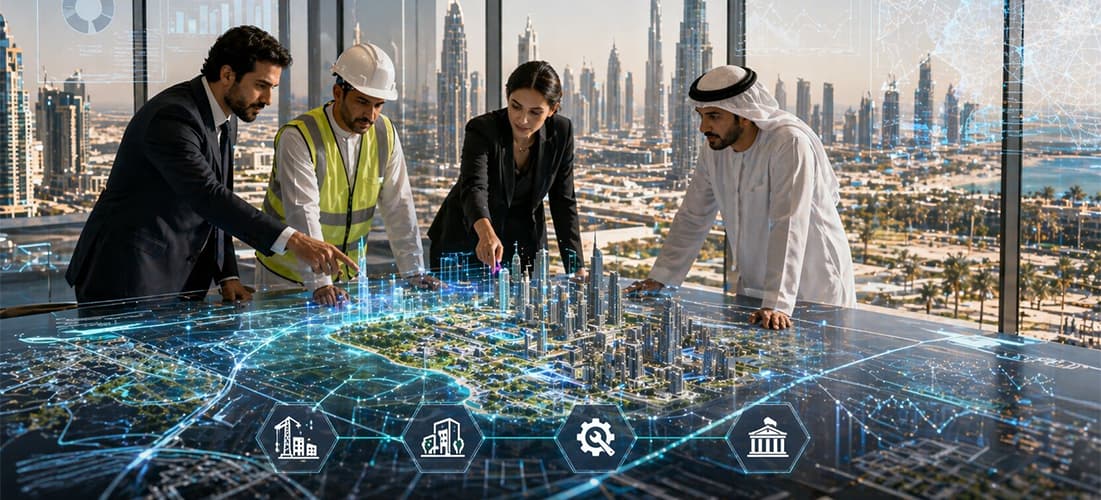
Understanding the built environment is not just an academic concept. Consider this: the UAE construction market is valued at USD 41 billion in 2024 and projected to reach USD 50.4 billion by 2029. The construction sector's value-added reached approximately AED 23.9 billion during the first nine months of 2025, growing by 8.5% compared to the same period in 2024. These are not background statistics. They represent a live opportunity - and how well your business understands the built environment determines how much of it you can access.
For construction contractors
A broader understanding allows contractors to position themselves beyond execution. It helps them align with infrastructure requirements, identify related opportunities, and respond more effectively to tenders that consider the wider project ecosystem.
For developers
Property value is influenced by more than the building itself. Connectivity, surrounding infrastructure, accessibility, and community planning all affect buyer decisions and long-term asset value.
For facility managers
Buildings do not operate in isolation. Their performance depends on integration with utilities, systems, and surrounding infrastructure. Understanding this improves operational efficiency and lifecycle management.
For government and infrastructure contractors
Public projects are closely aligned with national development strategies. Understanding the broader built environment helps ensure compliance with master plans, regulations, and long-term objectives.
Global Surf Perspective
At GS Digital, we consistently see that many built environment companies have strong technical expertise but struggle to communicate it effectively.
Understanding the built environment is one part. Clearly positioning that expertise in a way decision - makers understand is what creates measurable business impact.
Key built environment sectors shaping UAE development
The built environment is broad. But for business purposes, it helps to understand which sectors are most active, most funded, and most relevant to where your company sits in the market. Here is a practical breakdown of the UAE's key built environment sectors right now.
Residential Construction
From villa communities like Arabian Ranches and Damac Hills to high-rise apartments in Dubai Marina and JBR, residential remains one of the highest-volume sectors. Affordable housing initiatives and sustainable residential developments are growing segments, particularly as the UAE expands its population targets.
Commercial Real Estate
Office towers in DIFC and ADGM, retail and hospitality developments, and a growing pipeline of mixed-use projects are driving consistent commercial construction activity. ESG requirements are increasingly embedded in commercial specifications.
Industrial and Logistics
Free zones including JAFZA and Khalifa Industrial Zone, warehousing and distribution infrastructure supporting UAE's e-commerce growth, and port and maritime logistics facilities represent a significant and fast-growing built environment sector.
Transportation Infrastructure
Metro and tram system expansions, airport upgrades across Dubai and Abu Dhabi, and ongoing roads and highway network development are major public sector-built environment programmes. The RTA's pipeline alone represents tens of billions in active projects.
Public and Civic Projects
Schools, universities, healthcare facilities, government buildings, and cultural and recreational infrastructure form the backbone of community-level built environment development. These projects are typically government-funded and highly tender-competitive.
Energy and Utilities
Solar farms, nuclear energy infrastructure (Barakah), water treatment and desalination plants, and waste management facilities are a fast-growing sector as the UAE accelerates its Net Zero 2050 commitments. Renewable energy infrastructure is a priority procurement area for both federal and emirate-level authorities.
Current trends transforming the UAE's built environment
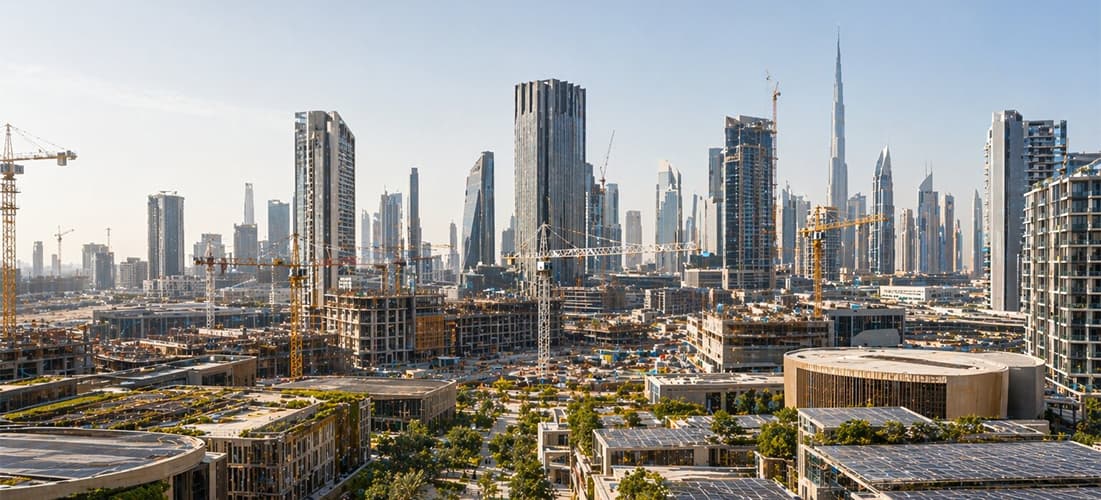
Several trends are actively shaping how projects are planned and delivered in the UAE.
Sustainability and green building
Green building standards such as LEED and Estidama are becoming standard requirements. Developers and contractors are increasingly expected to meet energy efficiency targets and contribute to national sustainability goals.
Smart building technologies
Buildings are becoming more connected through IoT systems, automation, and energy management solutions. These technologies improve efficiency and support long-term operational performance.
Modular and off-site construction
Prefabrication and modular construction methods are gaining traction. These approaches improve construction speed, reduce waste, and enhance quality control.
Wellness-focused design
There is a growing emphasis on occupant wellbeing. This includes improved air quality, natural lighting, ventilation, and access to community spaces.
Mixed-use developments
Developments that combine residential, commercial, and retail spaces are becoming more common. These projects create integrated environments that improve convenience and increase asset value.
Retrofitting and upgrades
Upgrading existing buildings is becoming a practical alternative to new construction in many cases. Retrofitting helps improve efficiency while reducing costs and environmental impact.
How digital technology is reshaping the UAE's built environment
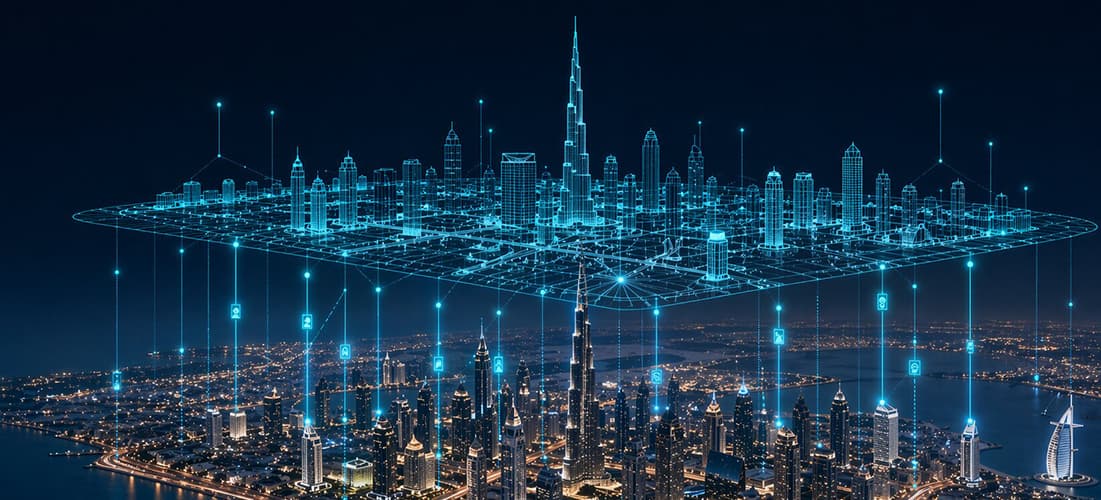
The UAE's built environment is not just physically ambitious. It is digitally ambitious. Several technologies are fundamentally changing how projects are designed, delivered, and operated, and understanding them matters both technically and commercially.
- Building Information Modelling enables better coordination across project teams
- Digital twins allow real-time monitoring and simulation of assets
- Drones improve surveying accuracy and site inspection efficiency
- Artificial intelligence supports planning, optimisation, and predictive maintenance
What most contractors overlook: having the technology capability is only valuable if the people who award contracts and commission projects know you have it. That is a communication and marketing challenge, not a technical one. And it is one that most UAE construction businesses have not yet solved.
Why contractor digital marketing matters for built environment companies in dubai and the UAE
Knowing your industry is one thing. Being known for knowing your industry is another. In 2026, the gap between those two things is increasingly a construction marketing problem - one that affects companies at every size and tier.
Consider how built environment contracts are actually won. A developer or government authority identifies a need. They research which contractors or consultants have relevant experience. Government and large private sector tenders in the UAE follow structured evaluation processes. Before technical evaluation begins, decision-makers increasingly conduct preliminary online research to verify company credibility and recent activity. At that stage, your online presence is either reinforcing or undermining the impression your submission creates.
B2B decision-makers research suppliers online first
Gartner research suggests B2B buyers increasingly prefer self-directed, digital-first research before engaging with vendors. Tender committees are no different. Before they open your pre-qualification document, many will have already formed an impression of your company based on what they found when they searched your name.
A professional website with a strong project portfolio, active LinkedIn presence, and visible industry thought leadership creates a halo effect that makes everything in your technical submission more credible.
Most UAE construction companies have a weak digital presence
Here is the competitive opportunity. Despite operating in one of the most active construction markets in the world, the majority of UAE contractors and consultants have outdated websites, minimal LinkedIn presence, and no content that demonstrates their built environment expertise to a general audience. This creates a significant window of opportunity for early movers. As the market matures and competition intensifies, companies establishing strong digital presence now will have a multi-year advantage. A company that invests seriously in its digital presence in this sector can gain a significant competitive advantage relatively quickly.
The first mover opportunity in construction marketing UAE
The data is clear. The UAE Construction Market is valued at USD 41 billion in 2024 and is expected to reach USD 50.40 billion by 2029 at a CAGR of 4.26%. Dubai Municipality processed more than 30,000 building permit applications in H1 2025 alone, a 20% increase year-on-year.
In our experience working with UAE construction companies, we consistently observe that many contractors and consultants have not yet invested seriously in their online footprint. Industry analysis suggests a significant portion still operate with websites not updated in two or more years, and with limited LinkedIn activity. This creates a significant first-mover advantage for companies willing to invest in their online presence. The window will not stay open indefinitely as the market matures.
What an effective construction company website strategy looks like
For a UAE construction or built environment company , an effective online strategy means:
- An SEO-optimised construction company website with a detailed, current project portfolio - not stock photography
- A LinkedIn company page built for contractor digital marketing that posts regularly and showcases real team expertise
- Content that demonstrates genuine understanding of UAE built environment trends, regulations, and challenges
- Case studies written to address the questions developers and procurement managers ask at shortlist stage
- Consistent branding and frictionless contact pathways across every channel where clients search for built environment companies in Dubai
Global Surf Perspective
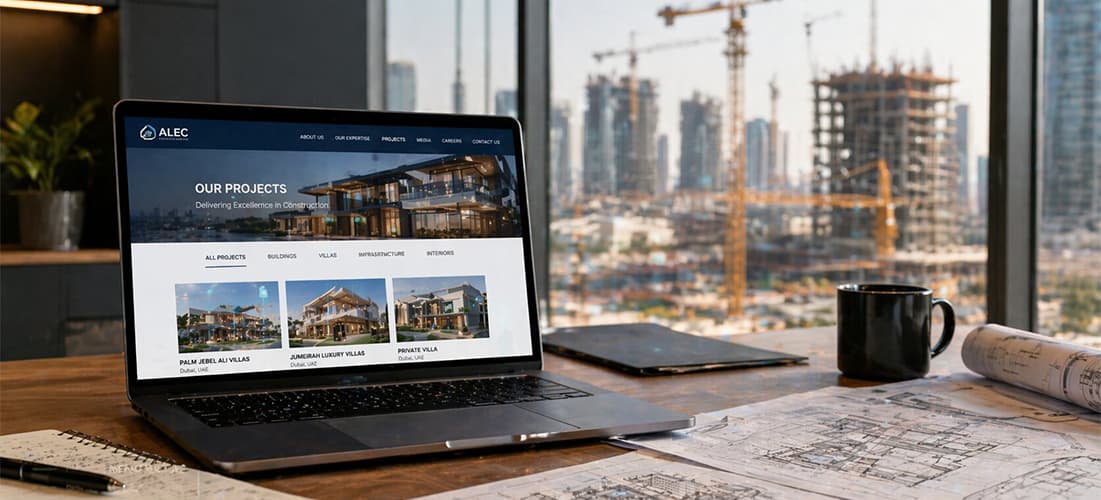
At GS Digital, we work specifically with built environment companies because we understand the sector and its commercial dynamics. Our clients include construction groups, contracting businesses, and building material brands operating across the UAE. We help them communicate their expertise to developers, consultants, and procurement teams through SEO, content marketing, LinkedIn strategy, and project portfolio development.
The built environment companies winning the most commercially valuable projects in the UAE right now are not necessarily the most technically capable. They are the most visible and the most credible online. That is a gap our team is built to close.
The most commercially successful firms in UAE construction combine technical excellence with strong online visibility. In competitive tenders where capabilities are comparable, that visibility becomes the differentiator. Technical credibility is still table stakes - what we help companies do is ensure their online presence reflects the standard of work they are already delivering.
Understanding the built environment: your competitive advantage
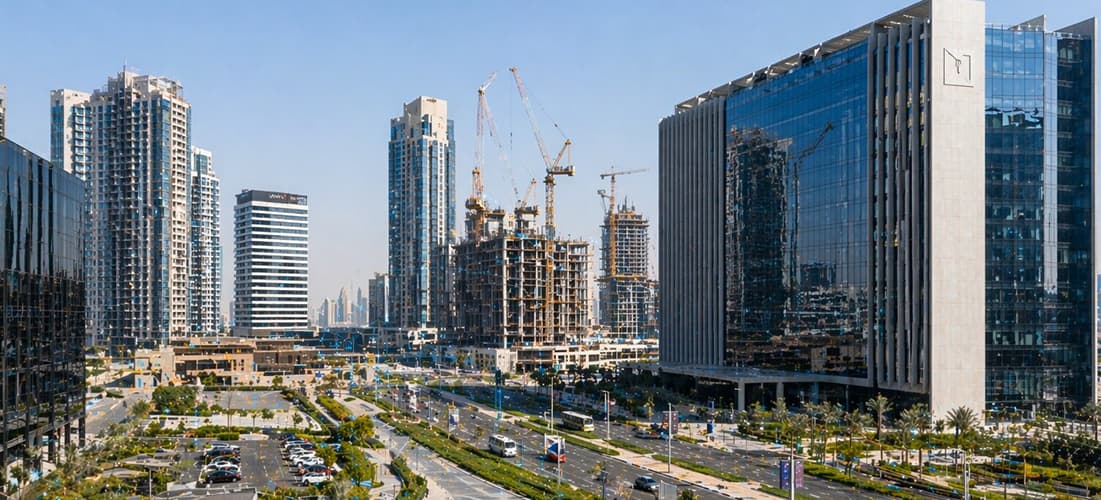
The built environment is a comprehensive concept. It covers buildings, infrastructure, public spaces, transportation systems, and everything that connects them into a functioning urban environment. In the UAE, that concept takes on an extraordinary dimension given the speed, ambition, and sheer scale of what has been built in the last fifty years, and what is planned for the next fifty.
For construction contractors, developers, facility managers, and government contractors, understanding the built environment in its full scope is a genuine strategic advantage. It shapes how you identify opportunities, how you write tenders, how you position your services, and how you communicate your expertise to the decision-makers who matter.
For construction contractors, developers, facility managers, and government contractors, understanding the built environment in its full scope is a genuine strategic advantage. It shapes how you identify opportunities, how you write tenders, how you position your services, and how you communicate your expertise to the decision-makers who matter.
Want to ensure your built environment expertise reaches the right decision-makers?
GS Digital helps UAE construction and contracting companies turn their technical expertise into digital credibility that wins projects. Let us show you how.
Frequently Asked Questions
1. What is the built environment in simple terms?

2. How is the UAE's built environment different from other countries?
3. What sectors are part of the built environment industry?
4. Why should construction companies care about digital marketing?
5. What regulations govern the built environment in UAE?
6. What trends are shaping the UAE's built environment?
7. How can my construction company improve its online presence?

Digital Marketing Strategist | Global Surf Digital

Aravind JS is a Digital Marketing Strategist with over 12 years of experience building and scaling digital presence for luxury brands, automotive clients, and B2B businesses across the Middle East and beyond.


