


Published on April 6, 2026 | Updated on April 6, 2026
Why Email Marketing Still Quietly Drives B2B Demand in the UAE in 2026


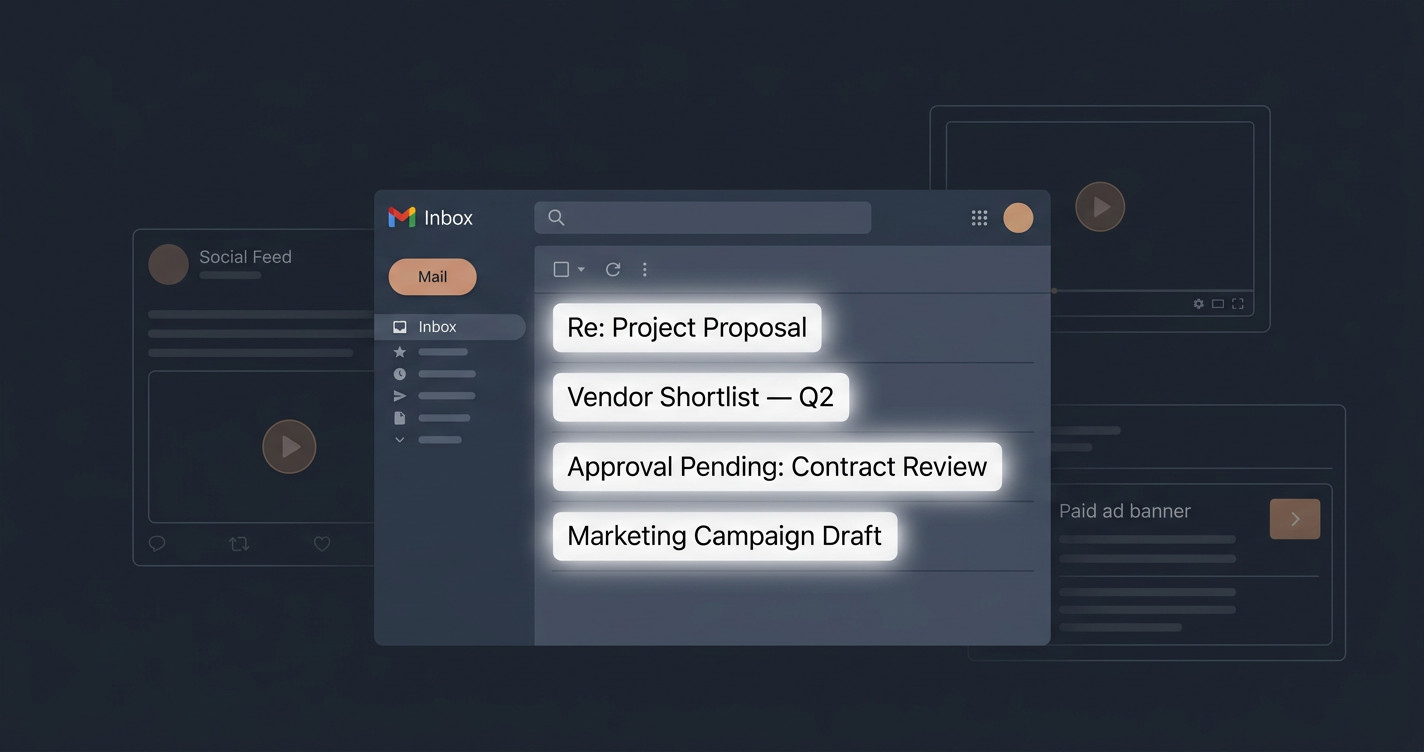
Table Of Content
1. Why Email Marketing Still Matters for B2B Decision Makers in the UAE
2. How Senior Buyers Actually Use Email in 2026
3. Why Email Marketing Fits Long B2B Sales Cycles Better Than You Think
4. Email Inside the Buying Committee: Reaching the Whole Team
5. What Makes Email Feel "Serious" Enough for High-Value Deals
6. Signals You Can Learn From Email Marketing (That You Rarely See Elsewhere)
7. A Simple Email Marketing Demand Generation Framework for UAE B2B Brands
8. Why Email Campaigns Perform Better During Uncertainty
9. The Tools We Use for Email Marketing
10. Why Ignoring Email Is a Quiet Risk for Your Pipeline
11. Frequently Asked Questions
In 2026, email marketing is still one of the most reliable ways to generate and nurture B2B demand in the UAE, especially for high-value projects and services.
While attention has shifted to social feeds, short videos, and paid platforms, the daily reality for senior decision makers is simple: a major part of their working day flows through email. Their most important projects, approvals, and vendor conversations live inside threads, not timelines.
This article focuses on how email marketing actually works in the background of B2B decision-making in the UAE, why it remains a strong demand-generation channel for sectors like construction, real estate, professional services, and technology, and how brands can use it more strategically without turning it into spam.
Why Email Marketing Still Matters for B2B Decision Makers in the UAE
As a performance marketing agency in the UAE, Global Surf has been working with B2B brands across the region for years. Most of these brands have at least experimented with email campaigns at some point. Many moved away when social and search began delivering faster volume. Yet when you look at how real deals move inside organisations, email quietly sits at the centre.
Why email marketing is most relevant in 2026
For UAE-based decision makers, B2B email marketing matters because of three practical realities:
- It is the one channel they are required to check every day for work, regardless of role or seniority.
- It is the default medium for anything that needs to be documented, forwarded, or revisited later.
- It feels "professional" by default, which is critical when the conversation involves budgets, risk, and accountability.
This is not about email replacing other channels. It is about recognising that, for high-value B2B decisions, email remains the place where serious conversations start, deepen, and get approved.
How Senior Buyers Actually Use Email in 2026
To understand why email marketing still drives demand, you have to look at how senior professionals in the UAE actually use it during a normal working day.
A major part of the day flows through email
For C-level executives, directors, and heads of department, a large share of their workday involves:
- Responding to internal updates and approvals
- Reviewing project status and escalations
- Coordinating with external consultants, vendors, and partners
- Sharing documents, decks, and financial justifications
All of this happens in email threads. When something arrives in the inbox, it enters the same environment as critical internal work. It is not competing with personal content, entertainment, or general browsing behaviour.
When your B2B email marketing outreach is designed with this reality in mind, it stops feeling like a "campaign" and starts feeling like a relevant, work-related conversation.

Why Email Marketing Fits Long B2B Sales Cycles Better Than You Think
Complex B2B decisions in the UAE rarely happen in a single meeting. They move through stages: awareness, internal discussion, evaluation, risk review, commercial negotiation, and finally, approval.
Long cycles need a thread, not a one-off touch
Email is naturally built for this kind of slow, multi-stage movement:
- Each interaction adds to an existing thread with full context.
- Past conversations, attachments, and decisions remain visible in one place.
- New stakeholders can be added at any time and immediately see the history.
Instead of chasing prospects with disconnected touchpoints, a well-structured B2B email marketing strategy lets you build a clear, documented narrative over weeks or months. This narrative is often what makes your proposal feel safer and more thought-through when it finally reaches the person who signs.
Email Inside the Buying Committee: Reaching the Whole Team

In the UAE, large purchases rarely depend on one person. A typical buying committee can involve a director or VP, finance, procurement, IT or operations, and sometimes legal or compliance.
One message, multiple stakeholders
Email is uniquely suited to how these teams actually coordinate:
- A director forwards your email to finance with "Can we evaluate this?"
- Finance sends it to procurement with "Can you check options and process?"
- Procurement adds legal or IT if contracts or integration are involved.
A single well-structured email campaign for B2B can move through this entire chain, carrying your value proposition, links, and documents with it. Each stakeholder can read it in their own time, add comments, and reply-all without switching channels.
This internal forwarding behaviour is one of the main reasons email marketing remains powerful for B2B demand generation. You are not only speaking to your initial contact. You are quietly entering the internal conversation between departments.
What Makes Email Feel "Serious" Enough for High-Value Deals
The perception of a channel matters as much as its reach. For high-value B2B decisions, stakeholders look for signals of seriousness, reliability, and professionalism. Email naturally supports that.
Why email has the right "weight"
Email works well for serious discussions because:
- The format supports depth: numbers, context, and nuance can be shared without character or layout limitations.
- Attachments like decks, financial models, and case studies are expected and normal.
- The conversation is easy to reference during internal meetings or board reviews.
In parallel, studies consistently show that a large majority of B2B decision makers prefer email for vendor communication about complex services, precisely because it allows them to process information at their own pace and forward it when needed.
This does not mean every email should be long. It means email marketing services give you the space to provide "serious" material when the moment is right, without changing platforms or losing context.
Signals You Can Learn From Email Marketing (That You Rarely See Elsewhere)
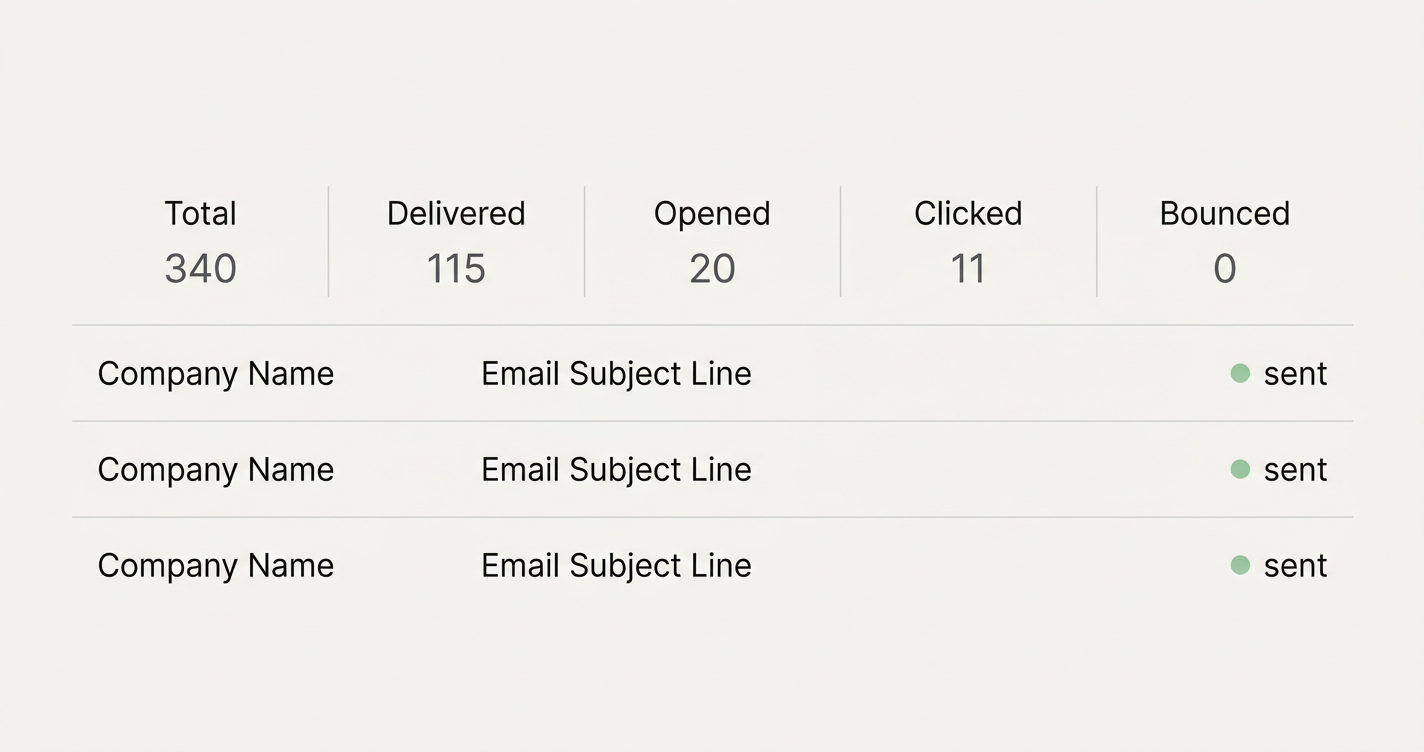
One of email marketing's biggest advantages in B2B demand generation is the clarity of its engagement signals. Unlike many other channels, you can see not just that someone interacted, but how and when.
Key signals from the inbox
Well-instrumented email tools can reveal:
- Who opens consistently across multiple sends
- Who clicks through to deeper content such as case studies or technical pages
- Who forwards or replies with "Can you share more details?" or "Please send this to my colleague"
Each of these behaviours tells you something different:
- Repeated openings suggest interest, even if there is no reply yet.
- Clicks on specific topics reveal which problems matter most.
- Forwards and multi-recipient replies often indicate that the conversation has moved inside the buying committee.
These are natural qualification signals. When you integrate email marketing data with your CRM and sales process, it becomes much easier to decide who to follow up with, when to call, and what angle to lead with. This is what separates a thoughtful email lead generation strategy from a simple broadcast list.
A Simple Email Marketing Demand Generation Framework for UAE B2B Brands
You do not need complex automation to start using email marketing more strategically. What matters most is how you structure the B2B email marketing strategy from first contact to qualified conversation.
Think education sequences, not sales blasts
A simple, effective email demand generation structure looks like this:
- Start with a clear market insight that is relevant to your prospect's role and sector.
- Follow with proof in the form of a case, example, or anonymised benchmark.
- Introduce your framework or approach to solving that problem.
- Only then invite them to explore it together in a call or meeting.
This approach respects how senior professionals think. It anchors your outreach in something they recognise in their own market, instead of jumping straight into a pitch. Over time, it positions your brand as a helpful expert rather than just another sales email. At Global Surf, this is the foundation of how we build email marketing lead generation programmes for B2B clients in the UAE.
Why Email Campaigns Perform Better During Uncertainty
When markets are uncertain, email is the channel that holds
During uncertain periods, event pipelines dry up and ad costs become harder to justify. Email marketing behaves differently.
Decision makers do not leave their inboxes during uncertainty. Internal coordination, risk reviews, and vendor evaluations all happen in threads. The inbox becomes more central, not less.
Ads feel like noise during difficult periods. Email does not interrupt. It arrives when the reader is already in a focused, work-oriented mindset. A well-timed, relevant email from a B2B email marketing strategy lands better during uncertainty than it would during normal market conditions.
The brands that keep showing up thoughtfully through uncertainty are the ones with the warmest pipeline when things stabilise.
The Tools We Use for Email Marketing at Global Surf

Running an effective email demand generation programme requires the right set of tools at each stage of the journey. Three platforms have consistently stood out in our work as a digital marketing agency in Dubai.
- Apollo for prospecting and email lead generation: build targeted lists by role, industry, and geography, and track who opened, how many times, what they clicked, and whether they forwarded internally.
- Mailchimp for nurture sequences and educational content: segmentation allows the right message to reach the right contact at the right stage of a long B2B cycle.
- Brevo for relationship-stage follow-ups and re-engagement: behaviour-based triggers ensure follow-ups go out at the right moment, not on a fixed schedule.
Why Ignoring Email Marketing Is a Quiet Risk for Your Pipeline
As a performance marketing company in Dubai, Global Surf has solid experience handling businesses across multiple industries for many years. From our work in B2B email marketing in the UAE, we have noticed that many brands have strong search and social strategies but treat email as an afterthought, or use it only for occasional announcements. That creates a quiet gap between where attention is created and where decisions actually happen.
When email marketing is missing from your demand generation mix:
- You rely heavily on channels that are not part of the daily workflow for many senior decision makers.
- You lose the opportunity to build a documented, cumulative narrative over time.
- You miss clear engagement signals that could help your sales team prioritise effort.
In 2026, email is no longer just a "newsletter" tool. For many B2B brands in the UAE, it is basic commercial hygiene: the connective tissue between discovery, internal discussion, and signed work.
Treat it as essential infrastructure rather than an optional campaign. Build a simple, respectful sequence. Measure real engagement. And align your sales conversations with what the inbox is already telling you.
Frequently Asked Questions
1. Is email marketing still effective if my prospects are very senior and time-poor?

2. How often should we email B2B decision makers in the UAE?
3. What kind of content works best in B2B email marketing for high-value deals?
4. Do we need complex marketing automation to make email marketing work?
5. How should we measure success from email marketing in B2B demand generation?

Performance Marketing Lead | Global Surf Digital

Ajay Kumar is a performance marketing specialist with a focused expertise in B2B campaign strategy, Google PPC, LinkedIn Ads, and account-based marketing. With over 3 years of experience, he focuses on building data-driven marketing systems that generate measurable growth.